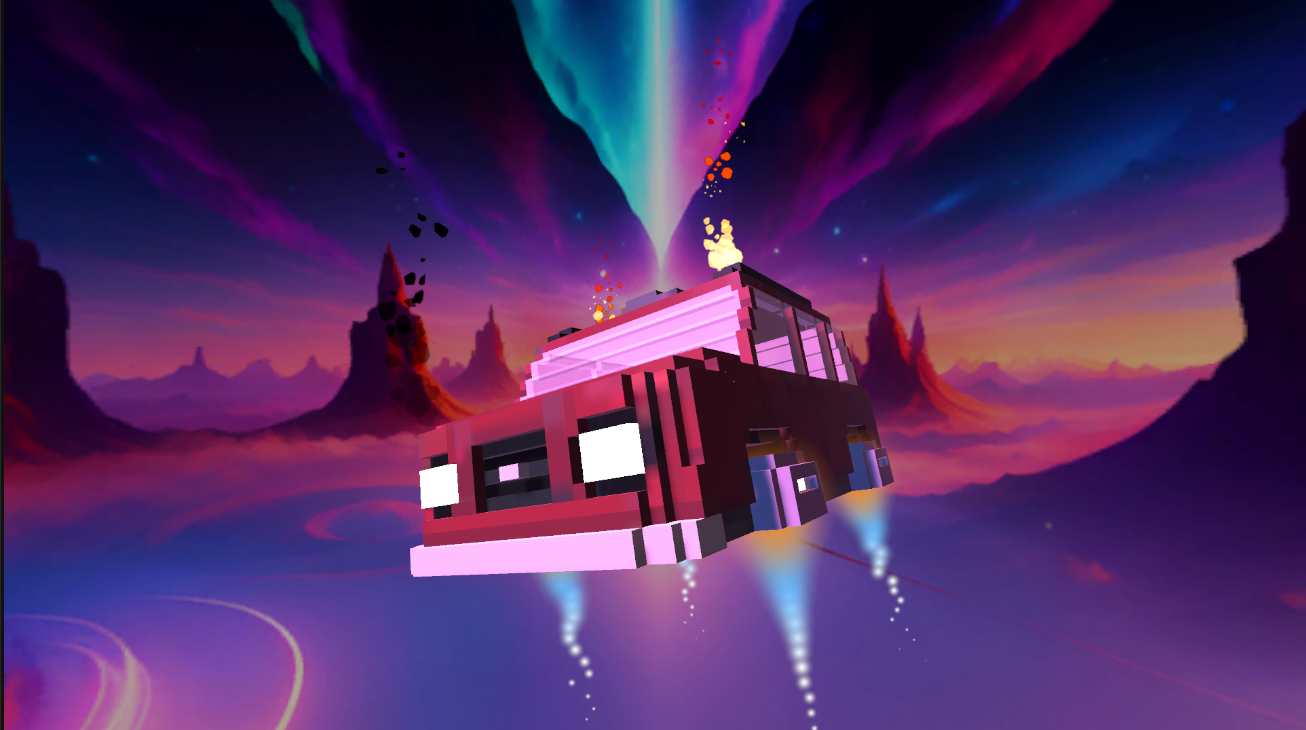
Cars Don’t Fly
A vehicle-survivor prototype where directional fire, modular equipment and complementary enemy behaviours turn driving into the combat system.
Design roadmap
Click a node to explore
Mindmap
Follow the system decisions that turned a vehicle-survivor hook into directional combat, modular equipment, complementary enemies and distinct build identities.
Finding the hook
League of Legends’ Swarm suggested an open design space: combine survivor pacing with the directional constraints and physical identity of driving a combat vehicle.
Mechanics & Implementation
Problem → system response
Making the vehicle matter in every decision
I used technical constraints to keep driving, aiming and enemy pressure inside the same gameplay system rather than treating the car as a visual theme.
Vehicle combat can lose its direction
Omnidirectional damage would let the player drift without caring where the car is facing.
Forward fire and a rear blind spot
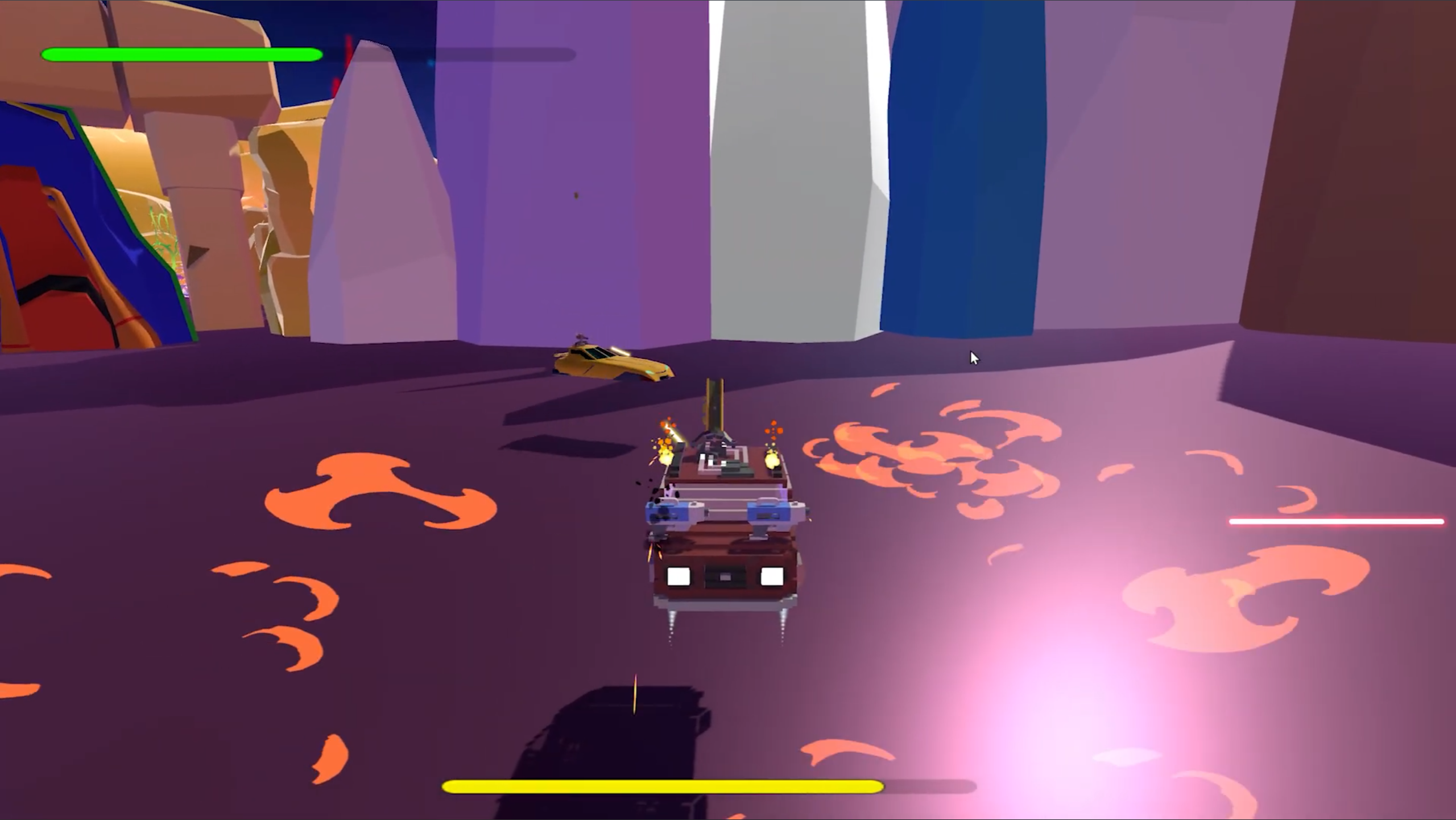
Two large front guns make facing a combat resource. Players must turn, route and expose the front of the car instead of dealing equal damage in every direction.
Weapon variety can become disconnected
Adding one-off weapons would increase content without creating a system players can read or combine.
A modular two-slot architecture
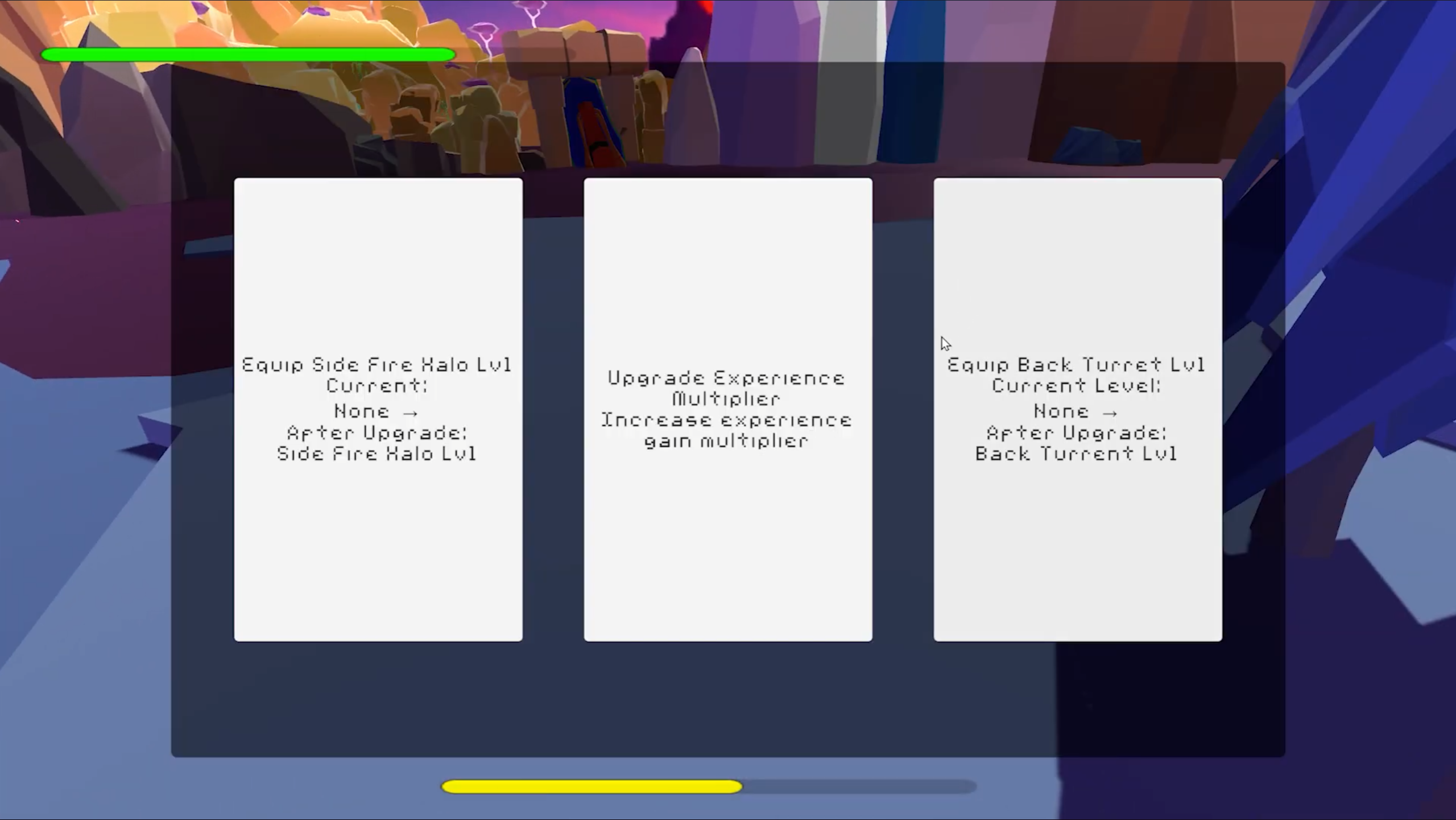
Top equipment handles precision or area coverage; Side equipment handles lateral control or close-range pressure. Four weapons create clear trade-offs inside a compact prototype scope.
One enemy pattern creates one safe route
If every enemy applies pressure in the same way, a single movement habit can solve the encounter.
Complementary behaviour roles
Punk Bomb Cars chase relentlessly while Turret Cars deny space with ranged fire. Players must answer immediate pursuit and longer-term positioning at the same time.
Build System
Four run identities
Let the player author the run
The upgrade system changes what the player values: survivability, burst damage, recovery or long-term scaling. The goal is not one correct build, but a different mechanical identity each run.
Tank
Stack health to absorb pressure and stay in dangerous spaces longer.
Glass Cannon
Stack damage to remove threats quickly, accepting less room for positioning mistakes.
Sustain
Heal on kill so successful aggression becomes the resource that keeps the run alive.
Growth
Increase experience gain, trading a slower opening for faster scaling later in the run.
Prototype Evidence
Systems in play
Clarity for rapid implementation
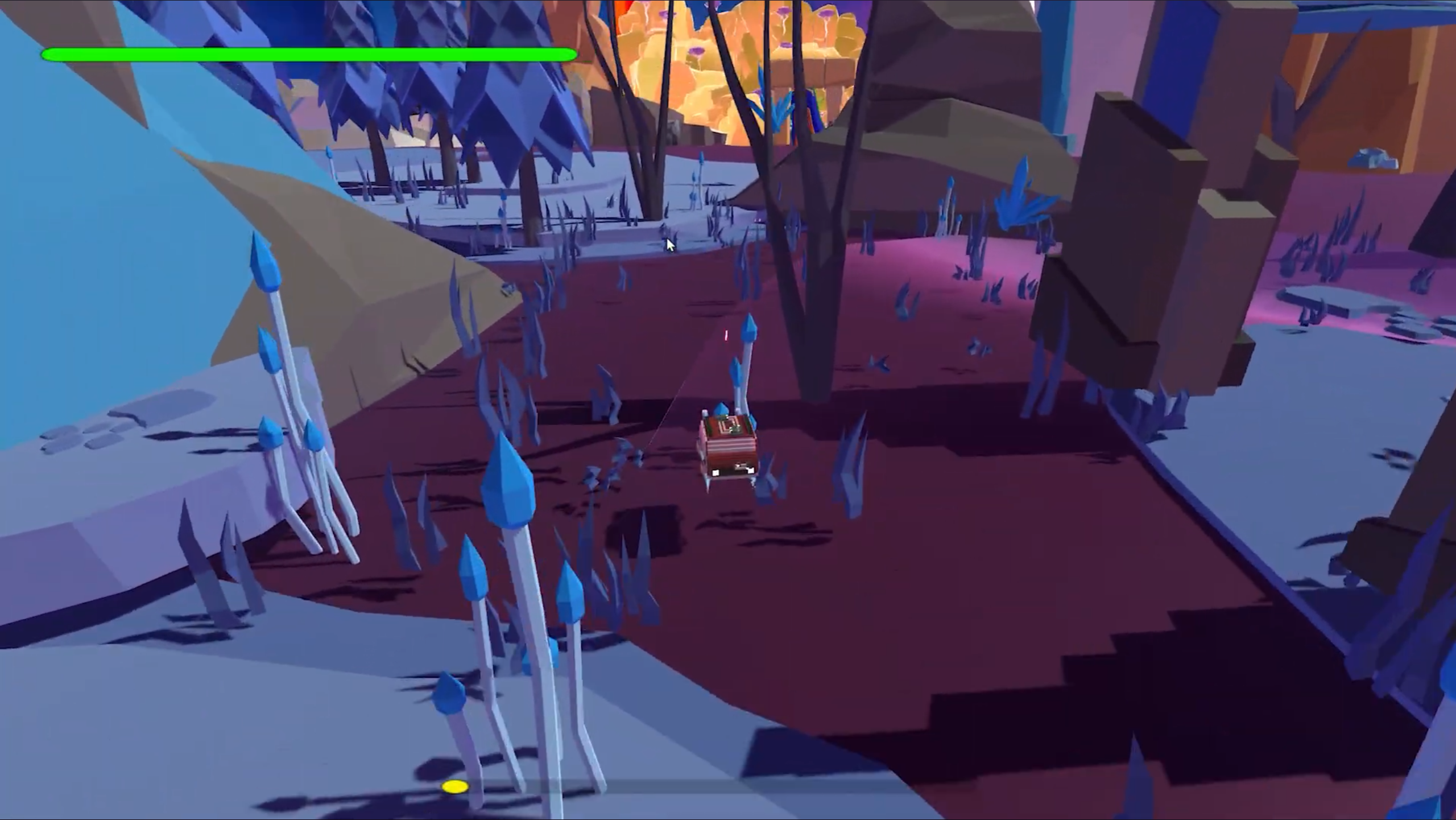
The 3D pixel and voxel direction supported fast iteration and made assets from different sources easier to combine. It serves the prototype pipeline rather than competing with the mechanics.
Future Roadmap
Planned · Not implemented
New roles built from the vehicle
These directions extend the prototype’s relationship between movement, weapons and responsibility. Neither is implemented in the current build.
Shared-vehicle co-op
Two players would divide responsibility for movement, weapons or other vehicle systems.
Coordinated control
How can one vehicle create meaningful, interdependent roles without reducing either player to a passenger?
Vehicle / on-foot separation
The player could leave the car and enter a second movement and combat state.
Two complementary states
How should vulnerability, navigation and combat change so leaving the vehicle becomes a decision rather than a simple upgrade?
Project Result
Playable prototype
A complete vehicle-survivor prototype
The project brings directional combat, modular equipment, enemy roles and build progression into one playable system and was presented at TUM Demo Day.
Open the existing project page to play the prototype.
View Cars Don’t Fly on itch.io